For years, I viewed quantum computing as a fascinating scientific idea that remained safely separated from ordinary life. That perception changed when researchers began showing that quantum errors could decline as encoded systems grew. The future of quantum computing after 2024 breakthroughs now looks less like distant speculation and more like a demanding engineering journey with measurable milestones.
The technology is not ready to replace conventional computers. However, advances in error correction, logical qubits, cloud access, processor design and cryptographic standards have created a more credible route toward useful machines. The next stage will determine whether laboratory achievements can become dependable tools for science and industry.
Why 2024 Became a Turning Point
The central problem in quantum computing has never been creating individual qubits. The harder challenge is keeping them stable long enough to perform accurate calculations. Qubits are extremely sensitive to temperature changes, electromagnetic interference and other environmental disturbances.
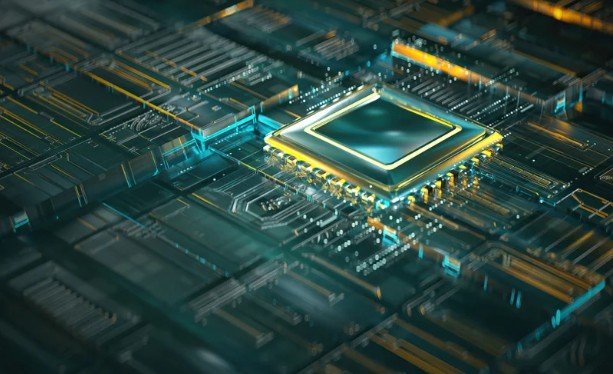
Google’s Willow processor delivered one of the most important demonstrations of 2024. Researchers tested progressively larger encoded qubit grids and found that the error rate decreased as the grids expanded. Moving from 3×3 to 5×5 and then 7×7 configurations approximately halved the logical error rate at each stage.
This achievement demonstrated below-threshold quantum error correction. It did not produce a complete fault-tolerant computer, but it supported a crucial principle: adding carefully controlled physical qubits can create a more reliable logical qubit. Although unrelated searches such as CFS meaning slang reflect broader online interests, this breakthrough remained focused on improving the reliability of quantum systems.
IBM, Quantinuum and other research groups also improved logical-qubit performance, circuit reliability and error mitigation. Together, these developments shifted attention away from raw qubit totals and toward the quality of useful quantum operations.
Physical Qubits and Logical Qubits Are Different
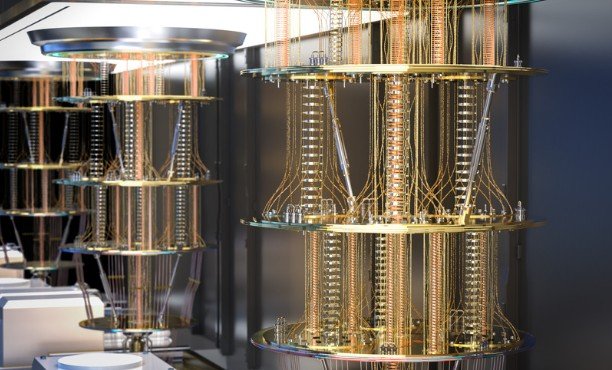
A physical qubit is an individual hardware component that stores quantum information. A logical qubit combines multiple physical qubits with error-correction methods to preserve information more reliably.
This distinction matters because a machine containing thousands of physical qubits may still have fewer practical capabilities than a smaller system with higher fidelity. Future progress should therefore be judged through several measurements:
- Logical error rates
- Circuit depth
- Gate fidelity
- Coherence time
- Connectivity
- Accuracy of completed calculations
- Ability to verify results
In 2025, Caltech researchers reported a highly coherent array containing more than 6,100 neutral atoms. It was an important scaling achievement, but it was not automatically a finished 6,100-qubit fault-tolerant processor. Researchers must still develop reliable control, entanglement, readout and error correction at that scale.
Competing Quantum Architectures
No single hardware design has definitively won the race. Superconducting processors offer fast operations and benefit from established fabrication methods, but they require extremely cold environments. Trapped-ion systems can deliver high-quality operations, although gate speeds and scaling present challenges.
Neutral-atom systems can arrange large numbers of atoms using optical tweezers. Photonic computers use particles of light and may offer advantages for networking. Silicon spin qubits could eventually benefit from semiconductor manufacturing experience.
Microsoft has pursued topological qubits through its Majorana architecture. The approach promises hardware-level protection against certain types of noise, potentially reducing error-correction overhead. However, claims surrounding Majorana-based topological behavior have faced scientific scrutiny. It should be presented as a promising but still developing architecture, not as a settled victory.
What to Expect Between 2026 and 2030

The future of quantum computing after 2024 breakthroughs will probably develop through gradual, specialized gains rather than one dramatic moment when quantum machines suddenly replace classical systems.
Verified Quantum Advantage
IBM expects the quantum community to demonstrate credible examples of quantum advantage using quantum processors combined with high-performance classical computing. Advantage means solving a specific problem more accurately, efficiently or economically than the best available classical approach.
Early advantages will probably appear in narrow research workloads. Every claim will need independent verification because conventional algorithms continue to improve.
Hybrid Quantum-Classical Computing
Quantum processors are unlikely to operate alone. A classical system will prepare data, control the workflow and verify results, while a quantum processor handles a carefully selected calculation.
Cloud services are already making experimental hardware accessible without requiring organisations to construct expensive facilities. Platforms from IBM, Google, Microsoft and Amazon allow researchers to test algorithms remotely. This quantum-as-a-service model may become the main route for early adoption.
Fault-Tolerant Systems
Several companies have published ambitious roadmaps for error-corrected machines before the end of the decade. These schedules should be treated as engineering targets rather than guaranteed delivery dates.
Remaining barriers include logical-gate fidelity, real-time decoding, quantum memory, modular connections, control infrastructure and the enormous number of operations required for useful algorithms.
Industries Likely to Benefit First
Chemistry and materials research are leading candidates because nature itself follows quantum rules. Better simulations could help researchers investigate catalysts, battery components, fertilizers, superconductors and molecular interactions.
Pharmaceutical research may benefit from improved molecular modelling, but quantum computers will not reduce the entire drug-development process from decades to days. Laboratory testing, clinical trials and regulatory reviews will remain necessary.
Financial institutions are examining portfolio modelling, risk analysis, and fraud detection. Logistics companies are exploring routing and scheduling, while manufacturers are studying complex supply networks. Although WTW meaning is unrelated to these technical applications, it reflects the importance of understanding terminology in evolving digital fields. Many current projects remain experiments rather than proven production advantages.
Why Cryptographic Migration Cannot Wait
A sufficiently powerful fault-tolerant quantum computer could run algorithms capable of threatening widely used RSA and elliptic-curve cryptography. Current quantum computers cannot break these systems at a practical scale, but organisations must consider information that needs to remain confidential for many years.
Post-quantum migration is already underway. New cryptographic standards allow governments and businesses to replace vulnerable methods before cryptographically relevant machines arrive. The immediate priorities include locating exposed encryption, updating long-lived systems and protecting data from “harvest now, decrypt later” attacks.
Commercial Growth and Investment Risks
Quantum technology is attracting government funding, venture capital and corporate partnerships. Investment is supporting processors, software, sensing, networking and cybersecurity.
However, commercial excitement does not remove financial risk. Hardware companies face high development costs, uncertain timelines and competing architectures. Revenue from experimental services does not guarantee sustainable profitability. Investors should distinguish scientific progress from stock-market momentum and avoid treating every qubit announcement as proof of commercial success.
Frequently Asked Questions
1. What is the future of quantum computing after 2024 breakthroughs?
The future of quantum computing after 2024 breakthroughs will focus on logical qubits, verified quantum advantage, hybrid computing, error-corrected machines and post-quantum cybersecurity.
2. Did Google Willow create a fault-tolerant quantum computer?
No. Willow demonstrated below-threshold error correction, which is an important step toward fault tolerance, but it was not a complete fault-tolerant system.
3. When will quantum computers become commercially useful?
Specialized applications may emerge before 2030, but widespread commercial usefulness depends on error correction, algorithm development and independently verified advantages.
4. Can quantum computers break encryption today?
No. Present systems cannot practically break widely deployed RSA or elliptic-curve encryption, but migration to quantum-resistant standards should begin well before that capability exists.
Final Outlook
I believe the strongest reason for optimism is not a single chip or qubit record. It is the growing ability to measure progress through logical errors, verified calculations and repeatable engineering results.
The breakthroughs beginning in 2024 did not finish the quantum revolution. They established stronger evidence that scalable error correction may be possible. Progress through 2030 will depend on converting that evidence into reliable machines, useful algorithms and applications that outperform constantly improving classical technology.